Thursday, October 16, 2008

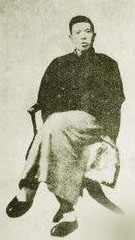
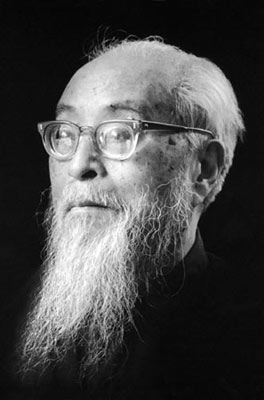
中國哲學家:馮友蘭(3)

中國公學原來定有一個開學日期。他們這二十人在開封考試以後,就趕往上海,如 期報到。校舍在吳淞砲台灣。校舍是一座按當時標準說相當漂亮的洋樓,單獨地建築在砲台灣車站附近,四周並無居民。電燈也是自己發電。他們到的時候,學校並 沒有開學,只有一座空校舍,連一個主要的職員都沒有。他們既然到了,就只好搬進去住。漸漸地有些主要職員來了。到了民國二年春天,終於開學了。校長黃興沒 有露過一次面。教師都是上海別的學校的教師來兼課,到了上課時間才坐著火車來,下課就又坐著火車走了。

住在校舍,四無鄰居,閒了到江邊走走,倒也覺得有點像世外桃源。友蘭只是喜歡到河南路棋盤街那一帶,那裡書店很多,友蘭喜歡買書,那二百兩銀子花不完就買書,也買了一些大部頭的書,如"廿四史"之類。

1915年暑假,就算是大學預科畢業了。就在上海考入了北京大學,暑假後進北京大學。

北 大當時的學生,在學習上是自由極了。本系功課表上的課,學生不愛上就不上; 別系的課,愛上就去上。教師那裡沒有點名冊,從來不點名。學生要上哪一課,只須在上課時到課堂上坐下就行了。就是與北大毫無關係的人,也可以進去聽講。在 上課之前,有一個人站在課堂門口,手裡拿一堆油印的講稿,當時稱為講義,進來一個人,就發給他一份,從來不問他是誰。往往有不應該上這個課的人先到,把講 義都拿完了;應該上這個課的人來了倒得不到講義。可是從來也沒有因此發生爭執,後來的人只怨自家來得太晚。


當時北大中國文學系,有一位很叫座的名教授,叫黃侃。他在課堂上講《文選》和《文心雕龍》, 這些書友蘭從前連名字也不知道。黃侃善於念詩念文章,他講完一篇文章或一首詩,就高聲念一遍,聽起來抑揚頓挫,很好聽。他念的時候,下邊的聽眾都高聲跟著 念,當時稱為"黃調"。在當時宿舍中,到晚上各處都可以聽到"黃調"。黃侃也常出題叫學生作詩。有一個本系的學生不會作詩,就叫友蘭替他作。友蘭作了幾首 擬《古詩十九首》的詩,他抄好送給黃侃,黃也居然加圈加點,還寫了讚賞的批語。

友 蘭的這種課外學習,倒是在友蘭家裡發生了作用,那就是友蘭把他的一知半解傳 授給友蘭的妹妹沅君,引她走上了文學的道路。自從他們從崇陽回老家以後,沅君就不上學了。友蘭從北大放假回家,在家中也常念詩念文章,沅君聽了很愛慕,就 叫友蘭教她。友蘭照著黃侃的路數,選了些詩文,給她講,教她念。她真是聰明絕頂,在一個暑假的很短時間內就學會了,不但會講會念,而且會寫,居然能寫出像 六朝小賦那樣的小品文章。等到友蘭第二次暑假回家,沅君的學問就更大了。北京傳來消息,說是北京女子師範學校要招國文專修科。這個學校是當時北京女學的最 高學府。他們都主張叫沅君去應考。

在暑假快結束的時候,友蘭母親就毅然決然,不顧別人議論,讓友蘭和景蘭、沅君三人一同進京。到北京報考,果然考上了,於是沅君就開始走上了文學創作和學術研究的道路。 他們三個人會走一條怎樣的路呢?下回分解。


(參考資料:馮友蘭自述)

中國哲學家:馮友蘭(2)

按當時清朝所定的學校制度,在縣城裡設小學,在省城裡設高等學堂,在北京設京師大學堂。學校分為這三級,恰好原來科舉功名也有三級:縣一級的功名是 秀才,省一級的功名是舉人,中央一級的功名是進士。成了進士,就算是登入仕途,可以做官了。把這兩個三級折合起來,縣裡小學畢業就相當於秀才,省裡高等學 堂畢業就等於舉人,在京師大學堂畢業就等於進士。

可是,當時的小學沒有教科書,每門功課都由教員自己弄些材料,上堂講,學生記,在黑板上 寫,學生抄。後來也弄來一架油印機,有些課用油印機把教材印出來,學生免得抄寫,覺得很方便。可是省裡又來了通知,說是在學生畢業的時候,學生們都得交上 他們親手抄寫的教材,油印的教材不能承認,不承認就不能畢業。那些快要畢業的學生們,都慌了手腳,趕抄以前發的油印教材。日夜不停地抄。有的請人代抄。四 哥還叫馮友蘭抄了好幾本。不過最後終於都畢業了。伯父就考慮四哥上開封升學的問題。馮友蘭的堂兄大哥、二哥當時都已經在開封上學。大哥上的是優級師範,二 哥上的是中州公學的法政專科。當時民間辦的學校,一般稱為公學。

公 學是相對於清政府的官辦學校而言的。當時的老百姓對於清朝政府已經不信任,一般都認為,民間辦的學校,都比官辦的好。這個中州公學,確實是當時河南的一些 比較進步的紳士所辦的。它除了法政班之外,還設有中學班,中學班恰好在年假後招新生。高小畢業,或有同等學力的人,都可以報考。伯父決定叫四哥去報考。大 哥、二哥向馮友蘭母親說,說馮友蘭也應該去。母親也同意了。

過了新年,大哥、二哥、四哥和馮友蘭四個人,還有些別的同學,一同起身往開封。先坐馬車到駐馬店去坐火車。當時從北京到漢口的火車,夜間不走,從北京到漢口要走三天。第一天由北京走到彰德,就停下了。旅客們都要拖帶著行李下車住旅館,等第二天再上車繼續前進。第二天,從彰德走到駐馬店,又停下來,旅客們又折騰一番,到第三天才到漢口。

他 們要投考的中州公學的中學班設在開封南關外,據說是從前的一個書院。考試又分為初試和復試兩次。馮友蘭初試考了第二名,復試第一名。四哥和其他高小畢業的 人都落在後邊,當時馮友蘭自己也有點驚奇。中州公學的監督是楊源懋,他的官銜是翰林院編修,在開封以紳士資格辦中州公學。楊不常到學校來,也沒有和學生講 過話。不過所請的教員都是有比較進步的思想的人,據說有些人還是同盟會的人。當時馮友蘭感覺這個中州公學好像是同盟會在河南的一個機關,因此學生們對於楊都很敬佩。那一年正好是1911年。[1]

辛亥革命就開始了,武昌起義一舉成功。清朝政府驚慌得不知所措,派陸軍部尚書蔭昌率新軍前往鎮壓。 各學校的學生都紛紛回家,大哥、二哥說,馮友蘭們也以回家為好,怕的是將來路不通,家裡接濟不到。在開封雇馬車,途經朱仙鎮,最後回到了唐河縣城,跟著三個堂兄先回祁儀鎮。

南陽鎮總兵一聽到革命軍就溜了,南陽、唐河這一帶就"光復"了。在清朝末年,實行了一些新政,往往用了些本地紳士,當時的總督張之洞要派一批人到日本學法政,有不少的官,跑到日本去住幾個月,回原籍就轉為紳了。

中華民國成立了。馮友蘭於民國元年春天又到開封中州公學上學,可是從楊源懋去世以後,學校大不如前,教師的陣容也不整齊。湖北有個紳士名叫陳時,說他奉父命捐款在武昌辦了一所學校,叫"中華學校",以黎元洪為校長。


在中華學校不久,又聽說上海中國公學要招生了。這所學校倒有一段光榮歷史。在日本的中國留學生,有一次不滿意日本政府對中國學生的待遇,集體回國,自辦學 校,名為"中國公學 "。創辦的時候,也出了一個有名的學生,就是胡適。 在辛亥革命的時候,中國公學也停辦了。這時候中國公學又恢復招生,推舉黃興為校長。用黃興的名義向各省 發出電報,叫各省選派學生。河南省很重視這件事,決定選拔二十名學生,到上海中國公學上學,每人每年發官費二百兩銀子。河南省決定以後,發出通告在開封招 考。馮友蘭同幾個同學回到開封應試,被錄取了,馮友蘭就於民國元年的冬天同其餘十九人一起到上海,進中國公學。

馮友蘭在上海將會遇到什麼重大事情呢?下回分解。

(資料來源:馮友蘭自述,鄭州市人民政府駐北京聯絡處, 圖片:wikipedia)

中國哲學家:馮友蘭(1)


馮友蘭於1895年12月4日出生,字芝生,當代著名哲學家及教育家。

幼年住在河南省唐河縣祁儀鎮祖父的家裡。祖父名玉文,字聖徵,有三個兒子.父親行二,名台異,字樹侯。伯父名雲異,字鶴亭。

叔父名漢異,字爽亭。父親後來成了清光緒(1898年)科進士。伯父、叔父都是秀才。在祖父教育下,馮友蘭就生活在這個書香之家。

祖父曾經去考過秀才,本來是可以錄取的,但不肯疏通,就沒有錄取。祖父從此就不再去應試了,一生沒有取得任何功名。可是他的詩作得很好,傳下來的幾十首詩,編為《梅村詩稿》。

伯父也能作詩,他把他自己的詩編為《知非齋詩集》。父親也能作詩,有《復齋詩集》。馮友蘭的一個姑母也能作詩,可惜十幾歲就去世了,留下的詩,家裡的人編為《梅花窗詩草》。

祖父大概有一千五百畝土地,不算大地主。在清朝末年,大地主有兩萬多畝土地。有幾千畝土地的地主很不少。

當時男孩子從七歲起上學,家裡請一個先生,教這些孩子讀書。女孩子七歲以後,也同男孩子一起上學,過了十歲就不上學了。首先讀《三字經》,再讀《論語》,接著讀《孟子》,最後讀《大學》和《中庸》。一本書必須從頭背到尾,才算讀完,叫做"包本"。

當時一般的私塾,叫學生讀一些記誦典故和詞藻以備作八股文、試帖詩之用的書,如《幼學瓊林》、《龍文鞭影》之類,但是馮友蘭的私塾中倒讀過一本新出的書,叫做《地球韻言》,這是一種講地理的普及讀物。

他的父親成進士以後,以知縣任用,分發到省裡去。當時以捐官指省的辦法,分發到湖北。光緒三十年,他父親終於在武昌擔任會計庶務委員(相當於後來的總務長),於是移居到武昌。

那時候,在武昌做兩湖總督的是張之洞,他辦了一些洋務,一些新政,其中有一樣是辦新式教育,在武昌辦了一所外語學校,叫"方言學堂"。他父親很重視學外文,所以希望他將來上方言學堂了。

因為他父親相信,在學新知識以前,必須先把中文學好,如果沒有一個相當好的中文底子,學什麼都不行。因此決定叫母親在家監督馮友蘭讀書。不久便讀完了《書經》、《易經》和《左傳》。他父親還教馮友蘭唱《學堂歌》。《學堂歌》是張之洞作的,用的是楚國的調子-《成相》。

光緒三十三年,他父親到崇陽當縣官,聘請了教讀師爺教授馮友蘭古文、算術、寫字、作文。古文讀本是吳汝綸所選的《桐城吳氏古文讀本》,一開頭就是賈誼的《過秦論》。馮友蘭在休息的時候在簽押房喜愛翻看《外交報》,因為其中發表的文章都是講世界知識和國際情況。

當 年縣立的高等小學確實與以前的縣學有相似之處。照明清兩代的教育制度,每縣都有一個縣學。縣學有 兩個官員,負責縣學的事,一個叫"教諭",一個叫"訓導",統稱為老師。考秀才就是這個縣學招生的入學考試。考上以後成為秀才,秀才是縣學的學生的名稱。 從前稱考上秀才為"進學",進學也不是縣官和老師所能決定,還得經過學台的復試,最後才能成為秀才,成為縣學中的正式學生,所以他們見縣官自稱為"生 員"。秀才之中有些稱為"廩生",每年可以得到一定的津貼,這就等於公費或獎學金。縣學招生了,伯父主張馮友蘭與馮景蘭去報名,只考了一篇策論式的文章, 便考進了學堂。

考進了學堂之後,馮友蘭會遇到什麼有趣的事情呢?下回分解。


(資料來源:馮友蘭自述)

Thursday, August 14, 2008

Google Founder - Sergey Brin

Knowledge is power

Everybody knows that knowledge is power. Who gets right information in hand can take action earlier in a right way. It is true in investment market and human resources market.

When we think about knowledge and information, the authors deserve their own right for generation of such treasure. Protection of authors' interest is the one of the key principles of copyright. However, if we think in another way, say the users of information, they can only reach it when copyright is resolved. Many precious things are not released due to copyright issue.

In certain sense, copyright becomes an obstacle of information and knowledge flow. Creative Commons becomes an important tool for authors to share, mix and reuse materials legally. It is different from copyright and public domain. Public domain means that there is no rights reserved for the materials under it. Copyright means that there are all rights reserved for the materials under it. Creative Commons just reserves some rights for the materials. It is far more flexible for authors. They have variety of options.

Then it is easy to release information and knowledge with appropriate protection of rights. It also release power to the users. When users get more power, their influence and their expertise would grow fast. Eventually, the world would evolve faster. That is the reason why the western societies evolve faster and faster. It becomes very hard for others to catch up.

Wednesday, July 16, 2008

same old topic

Philosophy is the art of thinking and questioning. We always look for definition of everything including definition. We want to find out the answers. We want to ask questions and even questions about questions.

We know what we know. We know something that we don't know. We don't know what we don't know. Is it beyond our imagination? Still in our imagination?

We also want to understand how we understand. We also want to understand why others cannot understand.

It is a process of learning. Learn how to learn. Maybe we practice to learn. Sometimes, we have to teach and even teach how to teach.

Why do we do so much? Maybe we can make a better life. But what is "better"? And what is "life"?

Friday, March 21, 2008

To make a better world (part 2)

(Continued from Part 1)

The whole world has been changing very quickly over past 100 years. Most of innovations, systems and development only happened in this period. The societies and international affairs are getting much more complex. There are great demands on the quality of new capabilities of global citizens.

Creativity is one of crucial ability that allows global citizens to adapt the ever-changing world, to find out new solutions for new problems and to find out new way to ensure sustainable development.

Regarding to culture conflict, love and respect in our heart becomes to the understanding, appreciation and forgiving to other culture.

Learning ability is another crucial ability. Confucius said there exists one teacher among three persons. In global context, we can learn merits from other better cultures and demerits from the worser. We need to compare these cultures objectively with a reasonable scheme and enough reflection. Reasoning is one of our valuable assets. It leads us to take actions in a concrete and constructive way.

Courage to adapt changes, introduce changes and implements changes. Every normal person would stay in its own comfort zone. It is quite similar to a country. It is very hard to change a country because of legacy especially the resistance from our own value system and the one who is taking advantages.

Leadership is also required. We need to encourage and motivate other team members. We need to have ability to resolve conflicts, make judge in controversy and so on. One of critical requirement for leadership is language power. Not only communicate effectively but also touch everyone's heart. It is like a poet to write a poem which makes others feel what author felt. It also helps other understand the leader's goal and purpose. It helps to determine a plan and comes to the agreement.

After everyone comes to the agreement, the rest depends on the power of execution. How can we implement the plan? How can we make it happen? How can we get the final result? Of course, every member must work together as a single team. Every citizen must take part in the public life. Public life can be in community level, national level and international level. Every global citizen must understand its own identity and responsibility.

Tuesday, March 11, 2008

To make a better world?

Someone would say that its own principal is to make a better world. Thus whatever he do would be meaningful. However did all of us have mutually agreed on the concrete meaning of a better world? Everyone has its own definition.

Establishmentalists favour to develop systems for everything. To them, a better world would be a world full of systems. Minimalists prefer to manage the world with minimum effort. Optimists would think too much on future problems. Their better world is already here.

Do we mean that a better world is a world of rich, a world of materials or a world of high technology? No. No. No. Money does not equal to happiness. The poors always exist and nobody can get rid of it. We cannot make everyone rich in the world. In fact, we cannot buy happiness, friendship, family, self-esteem and peace. We can only buy products and services. Our money is limited. Our time is limited. If our greed is unlimited, there is no way to make ourselves satisfied.

Technologies are just tools. Technologies only improve our efficiency and provide new ways. It won't provide us goals, purposes and attitude. However, it may magnify our effects. We cannot fully rely on technologies.

Basically there is a common place. A better world is a peaceful world where everybody can have a happy and healthy life. There is no pollution. The waters and the skies are clear. No more extinction. Everyone can enjoy the living place. They would respect each other, help each other, inspire each other and support each other. These imply that we need just, love and peace such that human being can enjoy the good times and overcome the bad times. In fact, we cannot expect we can make it immediately. Regarding to the dynamic sense of goodness, the whole world should be improved from time to time. Then, one day, we will be there.

Once we make up our mind about a better world. Then how can we make it? What are the conditions? What are the requirements on ourselves?

The persons who put effort to improve the world should outnumber the rest. We need education, mentoring, coaching and good examples. Reasoning is our critical tool to prove the definition and find out the feasible solution. We need all of us not just to focus on personal interest but also the global interest. We need enough knowledge to judge our values. We need to agree the global goal and put effort on it. We need courage to take action. We need to spread this idea and make others to spread this idea.

Very hard? Yes, it is very hard.

Friday, October 26, 2007

Existence and Evidence

I came across a quote. It sounds like that. We cannot find the evidence of non-existence of a particle. We just did not find any evidence of it's existence.

The interesting point is how we can prove something does not exist. It cannot exist or it does exist but behave as nothing. Is it possible?

How can we determine what existence is? What makes something evidence? What is the condition? Martin Heidegger had studied "existence" thoroughly. In his book "Being and Time", he talked about the criteria and properties of being of everything. He tried to compare being and not-being in a conceptual way. It was incredible in 1927 because not many philosophers would think about it deeply.

Evidence is normally an observable event which has connection with our subject. When we expect such subject does not exist, nothing would interact with it. No connection can be made in our universe. Thus no evidence of non-existence can be provided. Therefore, we cannot find the evidence of non-existence of a particle.

Wednesday, June 06, 2007

Definition of definition

A definition is a concise statement explaining the meaning of a term, word or phrase. The term to be defined is known as the definiendum (Latin: that which is to be defined). The form of words which defines it is known as the definiens (Latin: that which is doing the defining).

Given that a natural language such as English contains, at any given time, a finite number of words, any comprehensive list of definitions must either be circular or leave some terms undefined. If every term of every definiens must itself be defined, where should we stop?[10] A dictionary, for instance, in so far as it is a comprehensive list of lexical definitions, must resort to circularity.

Many philosophers have chosen instead to leave some terms undefined. The scholastic philosophers claimed that the highest genera (the so-called ten generalissima) cannot be defined, since we cannot assign any higher genus under which they may fall. Thus we cannot define being, unity and similar concepts. Locke supposes in An Essay Concerning Human Understanding that the names of simple concepts do not admit of any definition. More recently Bertrand Russell sought to develop a formal language based on logical atoms. Other philosophers, notably Wittgenstein, rejected the need for any undefined simples. Wittgenstein pointed out in his Philosophical Investigations that what counts as a "simple" in one circumstance might not do so in another. He rejected the very idea that every explanation of the meaning of a term needed itself to be explained: "As though an explanation hung in the air unless supported by another one", claiming instead that explanation of a term is only needed when we need to avoid misunderstanding.

Locke and Mill also argued that we cannot define individuals. We learn names by connecting an idea with a sound, so that speaker and hearer have the same idea when the same word is used. This is not possible when no one else is acquainted with the particular thing that has "fallen under our notice". Russell offered his theory of descriptions in part as a way of defining a proper name, the definition being given by a definite description that "picks out" exactly one individual. Saul Kripke pointed to difficulties with this approach, especially in relation to modality, in his book Naming and Necessity.

There is a presumption in the classic example of a definition that the definiens can be stated. Wittgenstein argued that for some terms this is not the case. The examples he used include game, number and family. In such cases, he argued, there is no fixed boundary that can be used to provide a definition. Rather, the items are grouped together because of a family resemblance. For terms such as these it is not possible to state a definition; rather, one simply comes to understand the use of the term.

(from Wikipedia)

Saturday, May 19, 2007

ejb3

EJB3 relationship management.
java.net: What's New in EJB 3.0
Krishna Srinivasan looks at the major innovations of Enterprise JavaBeans 3.0 and how they differ from earlier versions of the standard.
Enperprise Java Beans (EJB 3.0) - Tutorials and Articles for EJB 3

Enperprise Java Beans (EJB 3.0) - Tutorials and Articles for EJB 3
how-to-ejb30-entitymanager
Java Persistence Query Language : Weblog
EJB3 is not Hibernate

Saturday, March 17, 2007

long list of mobile games

Here is the long list of mobile games. You can search games for a specific model. Though it is in German, you still can go through all the screenshots.
mobilnew.a1.net/j2medc/frameset.htm

Thursday, March 01, 2007

Comics and Animation Festival in Beijing

http://games.tom.com/2007-01-30/00G5/08056525.html

http://www.pcgames.com.cn/cartoon/news/guoneinews/0702/860631.html

http://fabu.beareyes.com.cn/2/lib/200702/13/20070213007.htm

http://www.cinic.org.cn/HTML/2006/hybxw/20072258196.html

http://www.mofcom.gov.cn/aarticle/a/200702/20070204379624.html

http://news.xinhuanet.com/fortune/2007-02/12/content_5732233.htm

http://news.qq.com/a/20070213/00

Wednesday, January 31, 2007

Values of Games to Teenagers

Children love games. Teenagers love games. Video games, console games and online games give us the great experience on visual effects and interaction beyond our imagination. That's why the teenagers are fascinated by them. However, the human communication is lacked in those games. Sometimes, the illusion presented in these games may alter children concepts and values especially when they have not yet developed their own value system. The teenagers may see bloodshed in the uncensored games. They may get used to it. They may not take lives serious.

In fact, the healthy games should encourage human interaction and challenges. They should train up players' mind-body coordination, brain power, communication skills, etc. Thus players can be self-developed.

As what we can see, sport activities are encouraged in schools of United States. Basket ball, football, hockey, golf catch teenagers' eyes. The players can learn team spirit through the games. They understand that it does not matter to win or lose. Only friendship and personal development is what they gain.

In Hong Kong, sports is just sports. Game is game. Sports is for physical training. Game is for leisure only. The values of sports and games could not be quite understood. It requires much more effort for Hong Kong to cultivate the sports and gaming culture.